



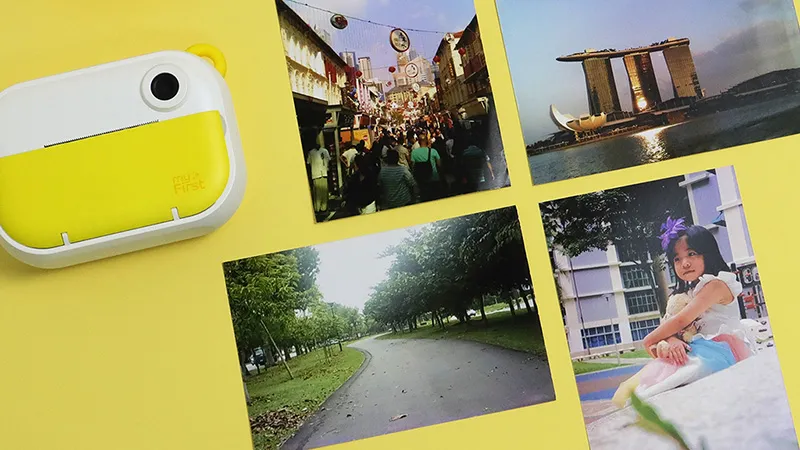
There’s something very charming about seeing the world through a child’s camera. Suddenly, the camera roll is full of close-ups of shoes, blurry pictures of the cat, the sky from strange angles, and about 47 photos of the same ice cream. But in the middle of it all, there’s something lovely too - the child starts documenting everyday life and discovering the world in their own way.
A children’s camera is therefore about much more than megapixels and technical specifications. It’s about creativity, curiosity, and giving the child their own tool for exploring the world around them. And perhaps most importantly - it’s a fairly screen-free way to use technology. The child creates instead of just consuming content.
Why do children like their own cameras so much?
Children often love the feeling of having something that’s truly theirs. A camera of their own quickly becomes something personal, something they take to the playground, on holiday, into the woods, or to grandma and grandpa’s house. And because the camera is built for children, you don’t have to panic every time it ends up a little too close to the ground.
Another nice thing is that photography trains a child’s eye in a natural way. They start noticing details, colors, and things adults often miss. Many children also become more engaged in outings and everyday activities when they get to document them themselves.
At what age is a children’s camera suitable?
Many children’s cameras are suitable from around 4-5 years of age because they’re built to be easy to understand. Large buttons, clear menus, and a durable design help the child get started quickly without needing help all the time.
For younger children, it’s mostly about pressing, trying things out, and having fun. Older children often begin to care more about video, effects, and actually saving pictures they want to show others. That’s why it can be smart to think about how long the camera will be used before choosing a model.
Durability matters more than megapixels
It’s easy to get stuck on numbers when comparing cameras, but for children, durability is almost always more important than high resolution. The camera will be dropped on the floor, taken out in the rain, and sometimes disappear into a backpack along with stones, raisins, and LEGO bricks.
A good children’s camera should therefore handle everyday use. Ideally with a shock-resistant design, a protective case, and easy charging. Water resistance is also very appreciated, because then the camera can come along to the beach, the pool, or rainy outings without drama.
Does a children’s camera need excellent image quality?
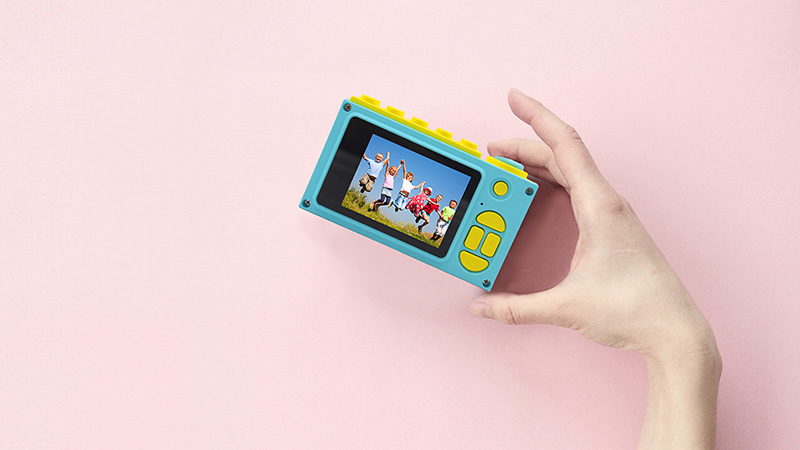
Not really. For children, the experience matters more than perfect sharpness. The pictures are often used to remember fun moments, print small photos, or simply show the family what the child discovered during the day.
That doesn’t mean quality is unimportant, but most children don’t need the same level as adult hobby photographers. What matters most is that the camera feels fast, simple, and fun to use. If the child has to struggle with menus or charging, interest often disappears fairly quickly.
A camera instead of even more screen time
One of the big advantages of a children’s camera is that it encourages activity instead of passive screen time. The child goes outside, looks for subjects, tries different angles, and builds their own little projects. Many even start creating stories or short films with friends.
That also makes the camera a very good alternative to a tablet during weekends, trips, or school holidays. The technology is still there, but the focus is on creating and discovering instead of endless scrolling and video clips.
What should you consider before buying?
First think about the child’s age and personality. Some children want something simple that just works straight away, while others quickly start experimenting with video, filters, and different functions. For younger children, simplicity and durability are almost always the most important factors.
Also look at battery life, storage, and how easy it is to transfer photos. A camera that needs constant charging or has awkward menus will often end up in a drawer after a few weeks. Ease of use almost always wins in the long run.
FAQ
At what age is a children’s camera suitable?
Many children’s cameras are suitable from around 4-5 years of age thanks to large buttons and simple operation. Older children can often appreciate more features such as video and effects.
Does a children’s camera need high resolution?
No, for most children, simplicity and durability matter more than very high image quality. The camera should be fun and easy to use in everyday life.
What matters most when choosing a children’s camera?
Durability, battery life, and ease of use are often more important than technical specifications. The camera should handle a child’s everyday life and be easy to understand.
Is a children’s camera better than borrowing a phone?
For many children, yes. A camera of their own encourages creativity without apps, social media, or other distractions that come with a smartphone.
Are there waterproof children’s cameras?
Yes, many children’s cameras are built to withstand both bumps and brief contact with water, making them better suited to play and outings.