



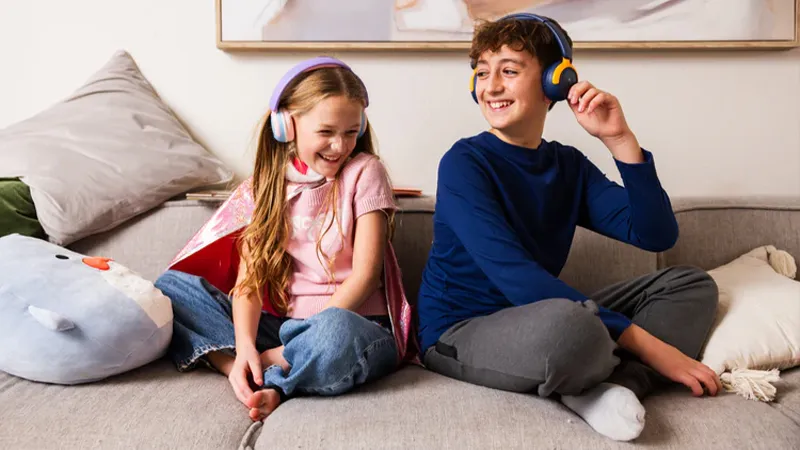
Choosing headphones for a child is about much more than color, design, or whether they’re wireless. The most important feature is something that often sits far down in the spec list: volume limiting.
Today, children use headphones for everything from tablets and audiobooks to video calls with relatives and music. That’s why it’s important to choose a model that protects hearing while still delivering a good listening experience. Fortunately, you don’t need to be an audio expert to make a good choice.
Why is volume limiting so important?
A child’s hearing is sensitive and meant to last a lifetime. Excessive sound levels over long periods can cause permanent hearing damage, even if the damage isn’t noticed right away. That’s why many experts recommend that children not be exposed to sound levels above about 85 dB for extended periods.
Regular adult headphones can often play much louder than that. If a child accidentally turns the volume all the way up, the sound level can in some cases exceed 100 dB, which is far above what is considered safe for long listening sessions. Volume-limited headphones help cap how loud the sound can get.
How many dB is right for children?
The most common recommendation is that children’s headphones should be limited to around 85 dB. That’s also the level many manufacturers use as a benchmark when developing headphones for younger users.
However, it’s important to understand that the dB value is not the whole story. Listening time also matters a great deal. A child listening at 85 dB for several hours every day puts more strain on hearing than a child who uses headphones for shorter periods. That’s why it’s wise to combine volume limiting with regular breaks.
Short answer: For most children, around 85 dB is considered a safe maximum sound level for everyday use. Lower levels are even better for longer listening sessions.
Not all children’s headphones are equally safe
It’s tempting to assume that all products marketed as children’s headphones work the same way, but that isn’t always the case. Some models have a physical limit built into the headphones themselves, while others rely on software or settings in the connected device.
That means some headphones can behave differently depending on whether they’re used with a tablet, phone, or computer. That’s why it’s worth checking how the volume limit works before you buy. A well-designed solution should provide the same protection regardless of which device the child uses.
Wireless or wired?
Both wireless and wired headphones have their advantages. Wireless models offer greater freedom of movement and reduce the risk of the child getting tangled in a cable. That makes them especially practical when traveling, in the car, or at home when a child is moving between activities.
At the same time, wired headphones can be easier to use because they don’t need charging. For younger children, fewer settings and less technology to keep track of can sometimes be an advantage. The most important thing is not which connection is used, but that the headphones fit comfortably and have a working volume limit.
Fit matters more than many people think
Even the best headphones quickly end up unused if they don’t feel comfortable. Children have smaller heads than adults, which makes fit especially important.
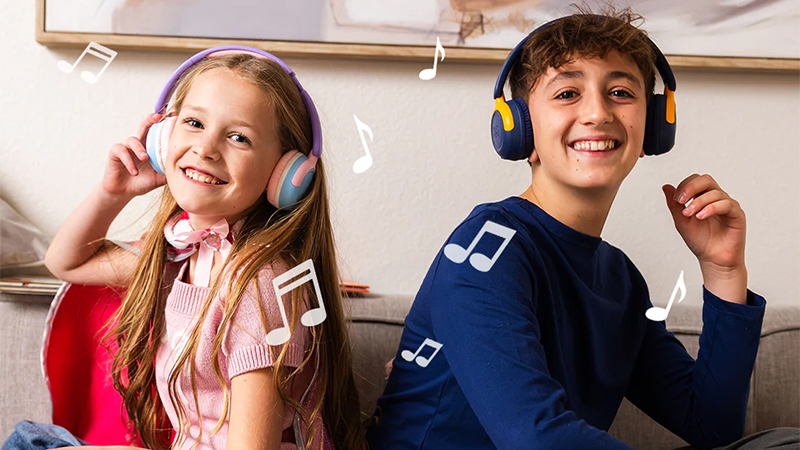
Soft ear cushions, light weight, and an adjustable size make a big difference during longer use. If the headphones fit too loosely, the child may turn up the volume to hear better. If they fit too tightly, they quickly become uncomfortable. A good fit therefore supports both comfort and safe hearing.
How to help your child listen safely
Technology does much of the work, but a few simple habits can provide extra protection. Encourage your child to take breaks during longer listening sessions and avoid using headphones all day.
A simple rule of thumb is to vary activities. The audiobook during the car ride can be followed by play, drawing, or other screen-free activities once you arrive. That gives the ears natural breaks while also creating a more balanced day for the child.
Checklist before buying headphones for children
When comparing different models, it can be helpful to check the following:
- Volume limiting of around 85 dB
- Comfortable fit for children
- Adjustable size
- Durable construction
- Easy to use
- Good battery life if the model is wireless
- Materials that can withstand everyday wear and tear
Summary
The best headphones for children are not necessarily the most expensive or the most advanced. What matters most is that they help protect a child’s hearing while still being comfortable and fun to use.
By choosing volume-limited headphones and combining them with healthy listening habits, you give your child a good foundation for enjoying music, audiobooks, and educational content without unnecessary risk. It’s a small investment that can make a big difference in the long run.
FAQ
Are headphones harmful to children?
No, not if they’re used correctly. Headphones with volume limiting and reasonable listening time are a good way for children to enjoy music, audiobooks, and educational content without disturbing others.
How many dB should children’s headphones have?
Most experts recommend a maximum sound level of around 85 dB. That helps protect hearing during normal use.
Are wireless headphones better for children?
Not necessarily. Wireless headphones offer more freedom of movement, while wired models are often easier to use. Safe volume limiting is more important than the type of connection.
How long can children use headphones each day?
There’s no exact limit that suits everyone, but regular breaks are important. Shorter listening sessions with breaks in between are better than several hours at a time.
What age are children’s headphones suitable for?
It varies between different models. Many children’s headphones are designed for children from around 3 years of age and up, but always check the manufacturer’s recommendations.