


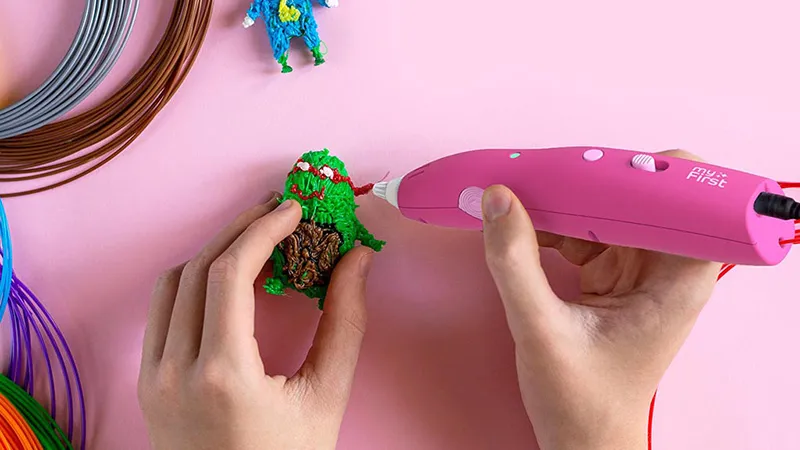
A 3D pen for children feels almost like something out of science fiction the first time you see one. Instead of drawing on paper, the child builds figures, shapes, and small creations directly in the air with melted filament. It is crafts, technology, and creativity in a very fun mix.
At the same time, many parents ask the same questions before buying one: what age is a 3D pen actually suitable for, and are they really safe for children? Those are completely reasonable questions. Some models get very hot and are better suited to teenagers and adults, while others are designed specifically for younger children with much lower temperatures and safer materials.
What is a 3D pen, really?
A 3D pen works a bit like a glue gun and a pen in one product. You feed filament into one end, and then the material is heated so the child can “draw” with the plastic as it comes out of the tip. The difference from regular drawing is that the creation becomes three-dimensional right away.
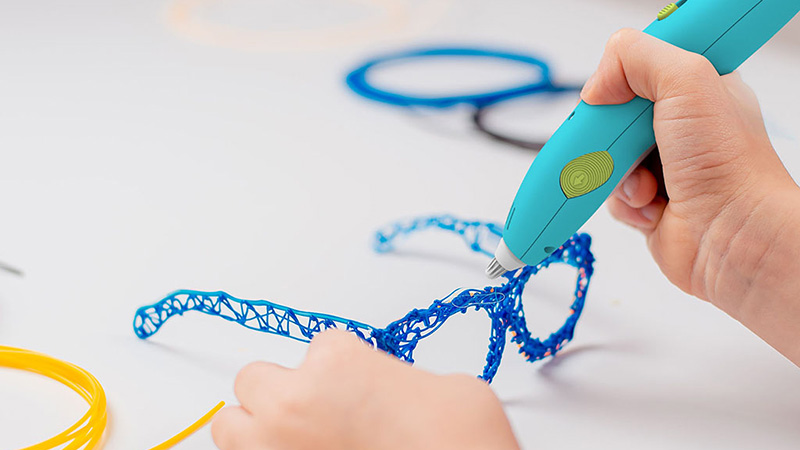
For many children, it quickly becomes more than just crafts. It is about building figures, signs, small animals, glasses, letters, or their own imaginary worlds. Some use templates, while others start creating freely quite quickly. It also becomes a very practical way to combine creativity with problem-solving and fine motor skills.
What age is a 3D pen suitable for?
It depends a lot on the type of 3D pen. Child-friendly models with low temperatures and PCL filament are often suitable from around 5-6 years of age, with an adult at first. For older children, it is usually fairly quick to understand the technique and start experimenting on their own.
For younger children, simplicity matters more than advanced features. A light pen with clear buttons and a low temperature makes a big difference. Older children, on the other hand, may appreciate greater precision, more speed settings, and the ability to create larger or more detailed projects.
Are 3D pens safe for children?
This is the most important question - and the answer is that it entirely depends on which model you choose. Some 3D pens use PLA filament that requires significantly higher temperatures. They are better suited to older children and adults who understand how the tool works.
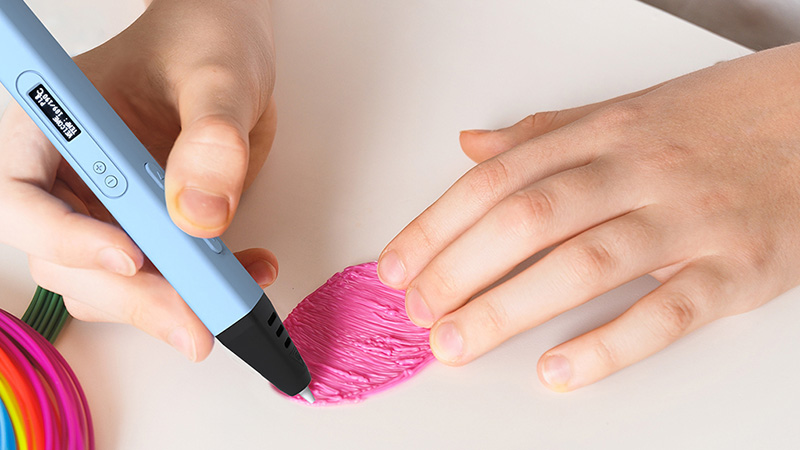
Child-friendly models often use PCL filament instead. It melts at a much lower temperature, often around 40-55 degrees, which makes the risk of burns significantly lower. That does not mean you should leave small children completely unsupervised, but it does make the product considerably safer for everyday use.
PCL filament makes a big difference
When comparing different 3D pens, the filament type is actually more important than many people think. PCL is softer, cooler, and more forgiving for younger users. That is why many children’s models focus specifically on that type of material.
Parents often look at the design or color first, but it is really the temperature and filament that determine whether the product feels safe to use at home, at the kitchen table. Especially if the child wants to use the pen often and independently, it is worth choosing a model that was built for children from the start.
What should you consider before buying?
The first thing is to think about the child’s age and patience. Some children love sitting for a long time and building details, while others just want to try fun shapes for ten minutes at a time. That is why it is smart to start simple rather than buying the most advanced model right away.
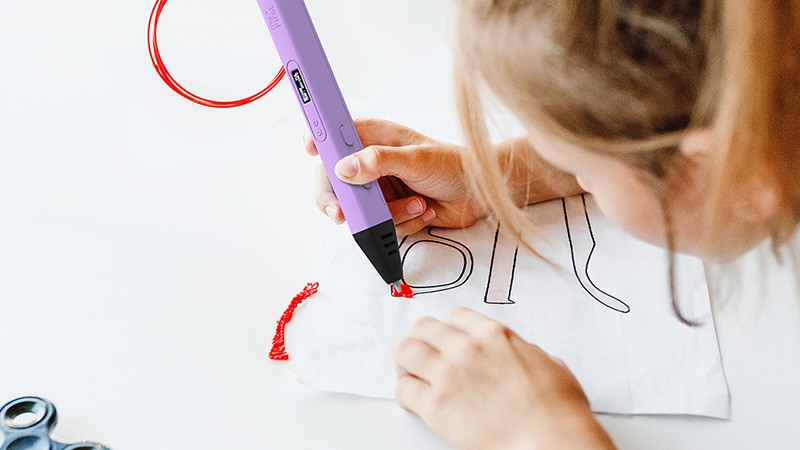
Also look at battery life, ergonomics, and whether the pen is wireless or not. Wireless models are often more convenient for younger children, since the cord otherwise easily ends up all over the table. The included templates and instructions are also underrated - especially at the beginning, when the child wants to get started quickly without frustration.
A creative alternative to more screen time
The nice thing about a 3D pen is that it feels modern and technical without the child getting stuck in front of yet another screen. Many children see it almost like a game or a creative experiment, but it happens with their hands and imagination instead of through TikTok or YouTube.
That also makes the product a very good alternative to a tablet or phone on rainy days, weekends, and holidays. The child still gets technology and creativity, but in a much more active way. And honestly - it is quite fun for adults to try too.
FAQ
What age is a 3D pen suitable for?
Child-friendly 3D pens with low temperatures are often suitable from around 5-6 years of age, with an adult. Older children can usually use them more independently after a little practice.
Are 3D pens dangerous for children?
It depends on the model and temperature. Child-friendly 3D pens with PCL filament are much safer because the material melts at a lower temperature than traditional models.
What is PCL filament?
PCL is a filament used in many child-friendly 3D pens. It melts at a low temperature and therefore feels safer and easier for younger children to use.
Do you need to know how to draw to use a 3D pen?
No, absolutely not. Many children start with simple templates and shapes before finding their own way to create. It is more about imagination and experimentation than classic drawing.
Is a 3D pen better than a tablet for creativity?
Of course, it depends, but a 3D pen often engages children in a more hands-on way. The child builds, tests, and creates with their hands instead of just consuming content on a screen.